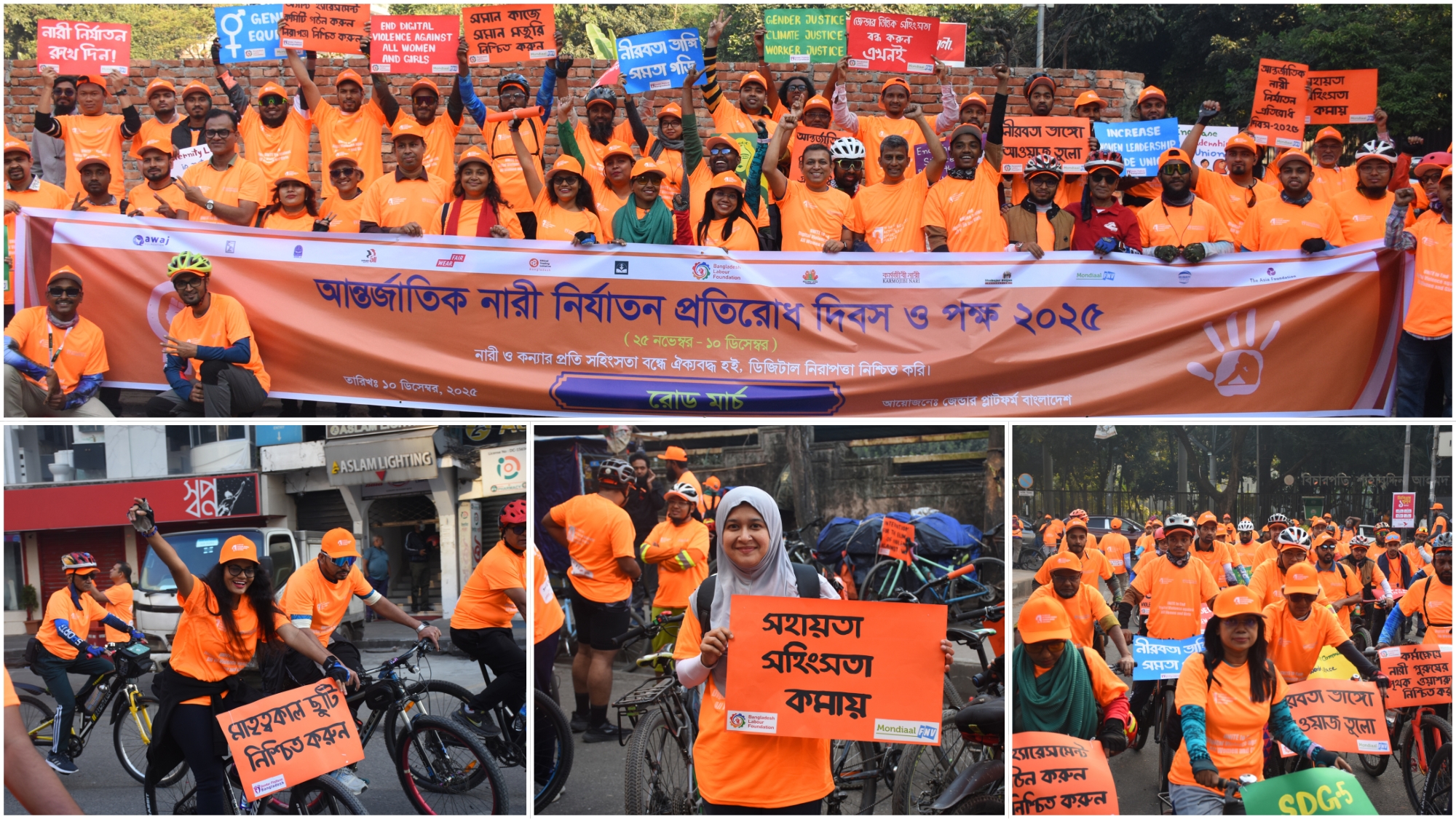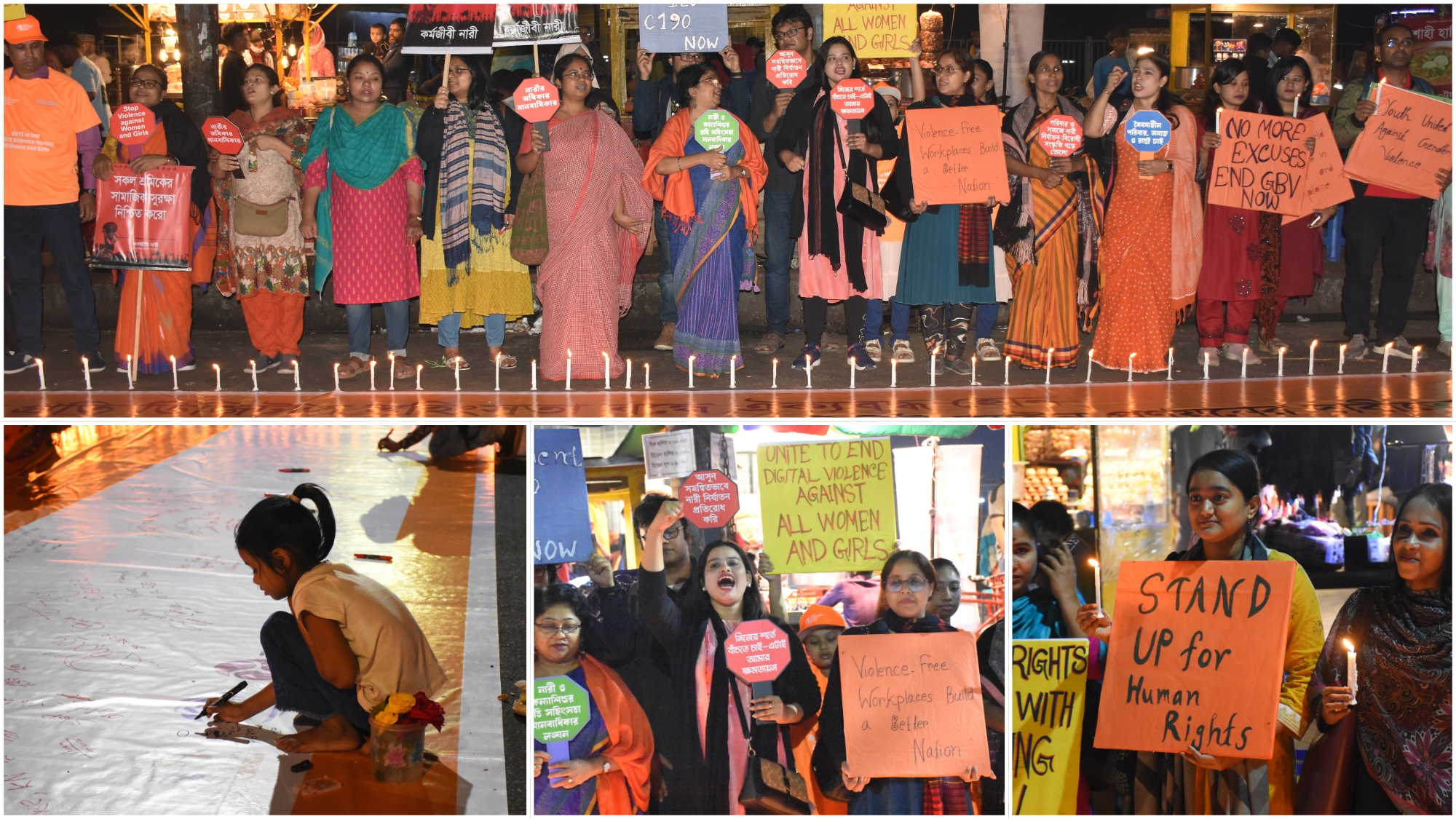
Candlelight Solidarity on World Human Rights Day
On World Human Rights Day, Gender Platform Bangladesh brought together activists, workers, and community members at Manik Mia Avenue for

A Study Dissemination on ‘Assessment of Technological Transition in the Apparel Sector of Bangladesh and Its Impact on Workers’ has arranged by Bangladesh Labour Foundation (BLF), Solidaridad Network Asia & Brac University.
Automation had led to a 30.58% decline in the total workforce across production processes in the ready-made garment (RMG) sector with the majority of the displaced workers being helpers, according to the study.
While automation has boosted economic growth and productivity in the sector, it has simultaneously created significant challenges for RMG workers—especially women, older employees, less literate individuals, and those lacking skills or confidence.
The sweater factory subsector experienced the highest workforce reduction, with a 37.03% decline per production line, followed by woven factories, which saw a 27.23% drop. In terms of specific production processes, the cutting stage showed the most pronounced reduction, with a 48.34% decrease in workers, whereas the sewing process experienced a comparatively smaller decline of 26.57%.
The findings emphasize the urgent need to address “Just Transition” issues, which aim to balance economic advancement with equitable outcomes for displaced workers, as highlighted in the study’s executive summary.

On World Human Rights Day, Gender Platform Bangladesh brought together activists, workers, and community members at Manik Mia Avenue for

The 16 Days of Activism Against Gender-Based Violence campaign concluded with a powerful call to action on Human Rights Day.
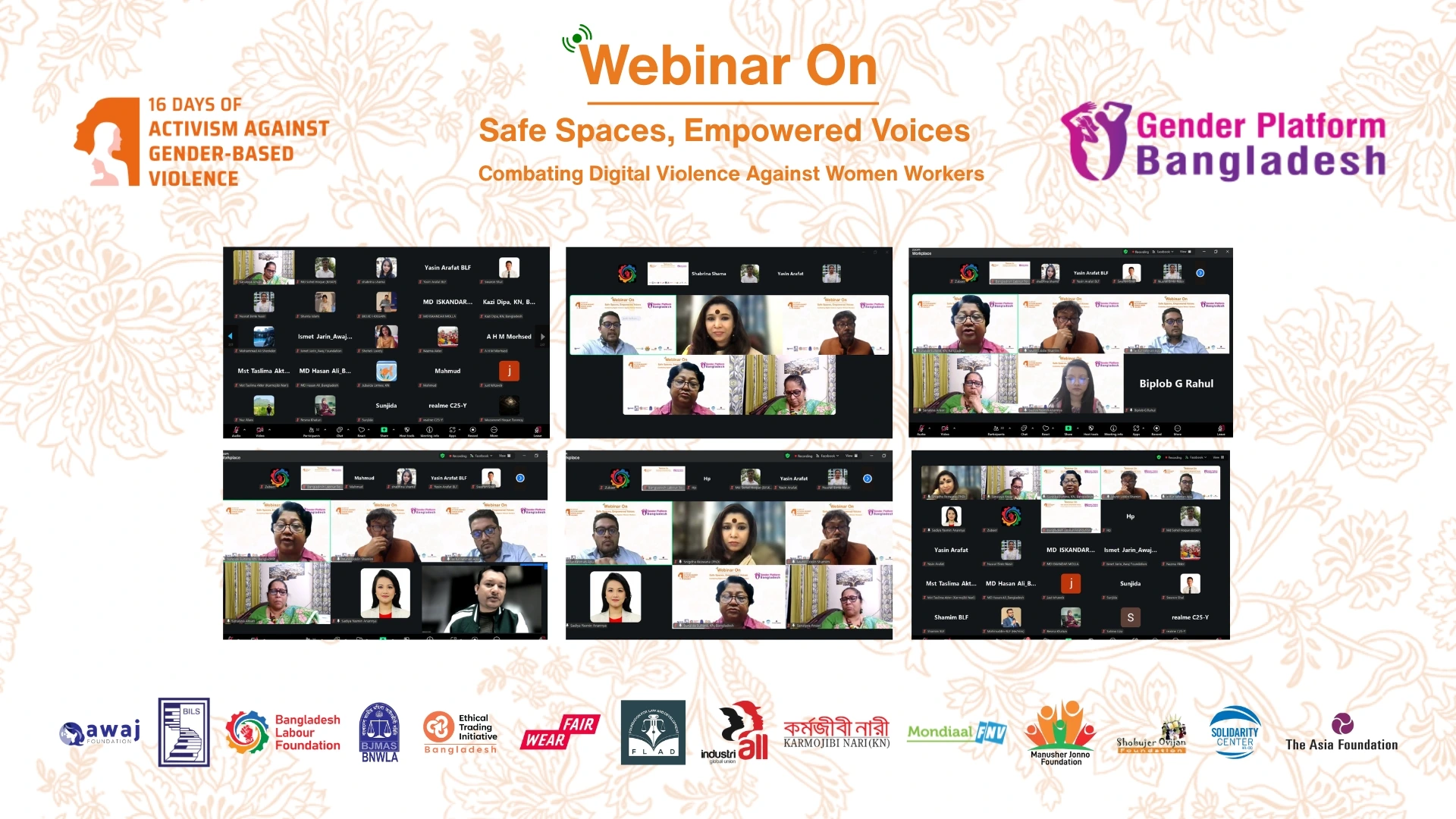
Bangladesh Labour Foundation (BLF) is pleased to announce the successful completion of the webinar titled “Safe Spaces, Empowered Voices: Combating
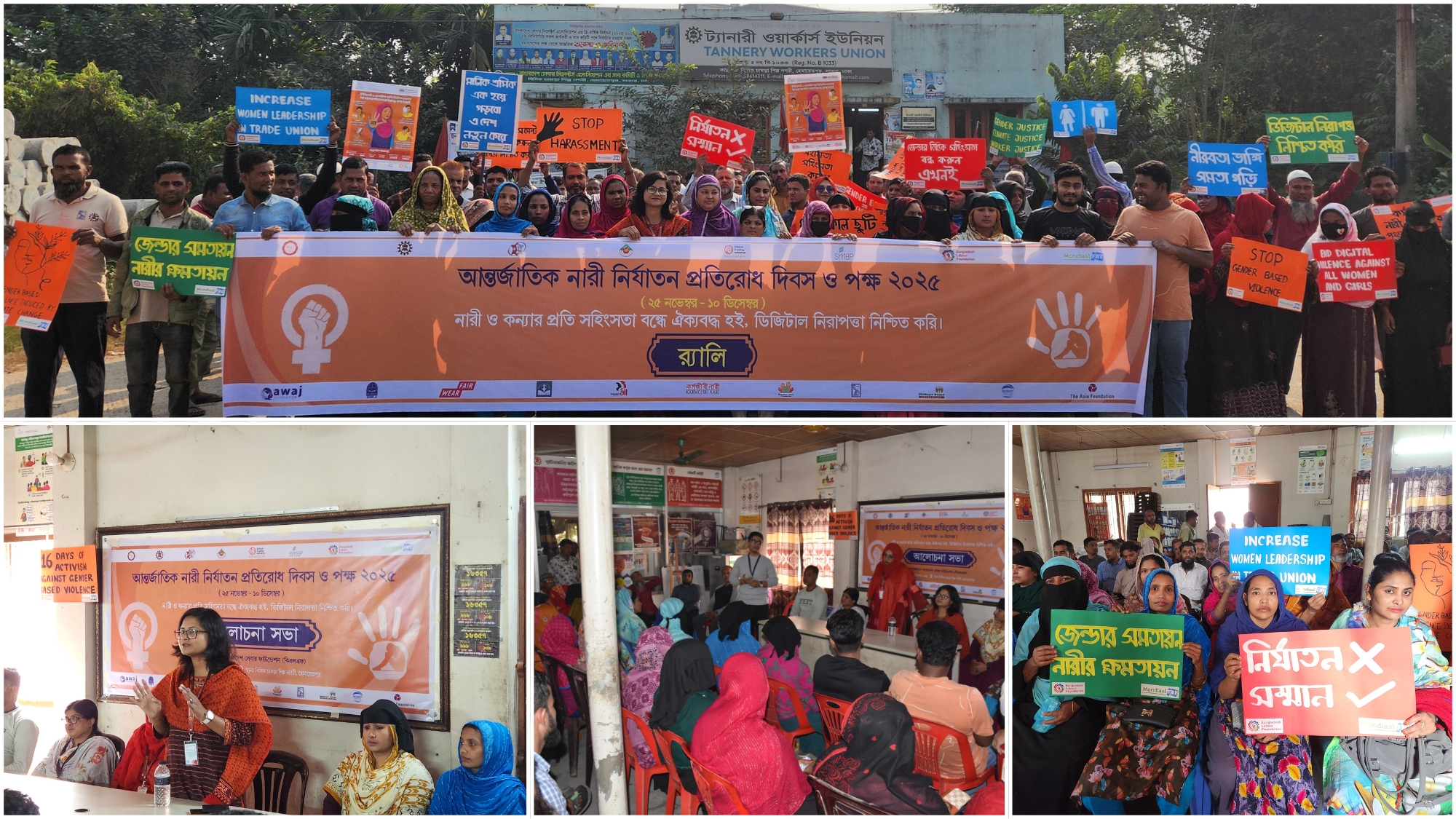
A discussion session and rally were held with tannery workers at the Tannery Workers Union office, jointly organized by Gender